
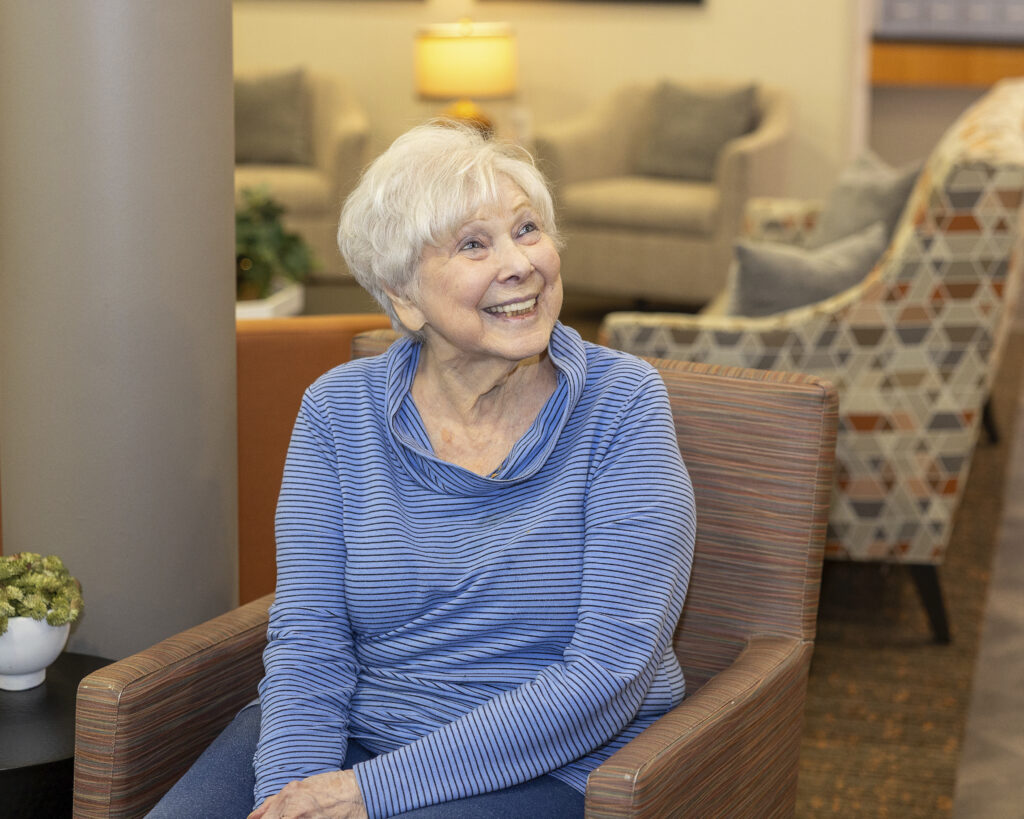
Jewish Senior Life residents moved in, after having left their homes partially filled with a lifetime of possessions. But they brought what mattered most with them. They brought their stories. Their memories of people they have loved and lost. The places they have been, the families they have raised, the adventures they have had. So much of a lifetime can’t be packed into boxes or displayed on a shelf. It lives inside us.
And then something beautiful happens. They begin making new memories. They gather around tables, meet neighbors who become friends. They share stories from long ago and from yesterday. They laugh together, discover new things about one another, celebrate milestones, and sometimes simply sit beside each other and enjoy an ordinary afternoon in our JSL communities listening to Opera or engaging in trivia games during happy hour.
They remind me that life isn’t measured only by what we manage to keep. It’s also measured by what we continue to create and the memories we make together.
A couple of nights ago, I wasn’t looking for a life lesson. I was organizing my art studio and looking through all sorts of special boxes we inherit or refuse to throw away because they might contain a relic of someone we loved. Boxes that follow us from closet to attic to basement, to studio patiently waiting for the day we open them again.
Mine contained letters and cards my parents wrote to each other, to my brother and me, and to friends and family. Eulogy tributes, notes penned in the margins of report cards. After my father died, relatives and friends around the world sent me copies of letters he had written to them, letters and emails they had held onto for years because they couldn’t bear to part with them.
There were photographs, too. Some carefully labeled. Others identified only by the faces of people who were alive when the pictures were taken.
I found a bag filled with my mother’s little spiral notebooks, more than a dozen colorful travel diaries she kept during trips with my father from 1960 to 1995. Each was a treasure trove because, as a lifetime stenographer, archivist and librarian, she recorded everything: meals, weather, museums, hotels, train schedules and airplane routes, charming restaurants near hotels and terrible ones too. Beautiful paintings, interesting people and so much more.
Those notebooks moved me deeply. They reminded me that memories don’t have to be stored in a box to be precious. Sometimes the best ones are the memories we are still making. As I read, I realized these weren’t simply records of where my parents had been. They were evidence of how they lived.
They went looking for adventures in the world. They wandered unfamiliar streets; tried a multitude of colorful and delicious ethnic foods, spent hours, days and weeks in world class museums and galleries, stopping to look, read and learn. They found beautiful things and took the time to really see them.
What strikes me most, decades later, is how much attention they paid to the little things: a memorable meal, a beautiful sunset, a quirky couple at the next table, a painting they nearly missed seeing due to a cab driver’s error, and endless moments of delight they planned or simply stumbled upon.
Those details, insignificant perhaps at the time, are now some of the things I treasure most. Reading the notebooks aloud to my husband, I began to understand that I wasn’t just rediscovering my parents’ travels.
I was rediscovering their philosophy of life: Be curious. Get dressed and go somewhere new. Try the restaurant. Visit the museum. Buy the thing if you love it. Take the train. Order dessert. ALWAYS order dessert!
Walk down the unfamiliar street. Talk to someone you don’t know. Make a new friend. Stay an extra day. Ask questions. And if you see something beautiful, for heaven’s sake, stop and really look at it.
My parents didn’t have phones in their pockets recording every 4-course meal, breathtaking sunset and airport lounge. If they wanted to remember something, they wrote it down. If they wanted a photograph, they took one. If they wanted to tell someone what they had seen, they sent a letter.
My mother is especially famous for the letters she sent to her sister, describing the two years she spent getting to know my father when they were stationed at Perrin Field, Texas, around 1943 before their wedding in 1945. We named these “Dirt From Bert.” I look forward to rereading these again and again.
Maybe that made my parents more deliberate about what was worth remembering. And maybe they never imagined that decades later, their daughter would sit surrounded by those notebooks and photographs, feeling as though they had come back to life.
The lessons mothers teach us aren’t always the ones we remember hearing. Sometimes they’re the lessons we absorb simply by watching. What did your mothers (and fathers) teach you?
My mother taught me that a beautiful table is worth setting.
That a special occasion doesn’t need a special reason.
That good food matters.
That beautiful things deserve to be appreciated.
That curiosity is a virtue.
Her notebooks taught me something even bigger: Don’t wait to start living.
My parents waited for us to go to sleepaway camp or enroll in college and then made decisions together to travel the US and the world, and off they went. They wandered. They looked. They tasted. They learned. They came home with stories of people and places and recounted them many times over the years to each other, helping to keep those memories alive.
And now, all these years later, those old boxes have given me a way to be with them again. They also remind me that the life we live today becomes someone else’s memory tomorrow.
So be curious. Explore the unknown. Go see, taste and experience new places, people and things. And don’t forget to write some of it down.
Because someday, someone you love may open a box… and find you there.
May our lives be full of things worth remembering.
SHABBAT SHALOM